GeoVax’s CEO calls on government support to bolster domestic biotechnology and keep pace with China.
National biosecurity has become a frequent topic of conversation in recent years as the US seeks to counter Chinese efforts to exert dominance in biotechnology. Stakeholders are concerned that if the US lags in biotech, the implications could be far reaching.
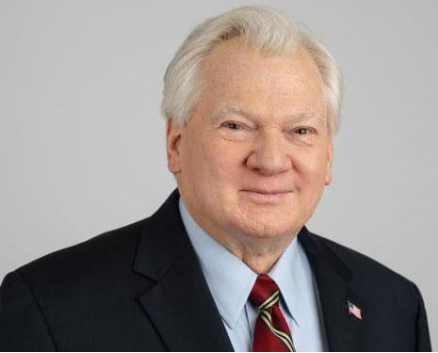
BioProcess Insider recently spoke with friend and frequent contributor David Dodd, CEO of GeoVax, about the state of biosecurity in the US and the risk of the country becoming overly reliant on other nations in the realm of biotechnology.
Scientists around the world are continuously developing and testing potentially curative treatments for diseases. In a perfect world with open collaboration and political neutrality, it shouldn’t matter who develops a cure. But in reality, if such a treatment were to come from a country such as China that government officials view as adversarial to the US, the impact would be unpredictable and potentially damaging to domestic interests.
Related:Second Act? Addressing Europe’s biomanufacturing blind spot
“If they have the cure, the innovation, and the manufacturing there, that means they control access to [the] product,” Dodd said.
And the economic dominoes could continue to fall. If the US falls behind in biotech, companies will be compelled to seek services outside the country. At worst, greater safety and security threats could develop, especially with risks to US vaccine stockpiles that are currently reliant on foreign partnerships.
Navigating the gap
GeoVax is preparing for Phase III clinical trials for its GEO-MVA program, which is under development to provide protection against mpox and smallpox. Currently, only Danish firm Bavarian Nordic can commercially manufacture a comparable vaccine through its MVA-BN product. Should GeoVax’s GEO-MVA vaccine be approved and commercialized, it will provide a US-based alternative.
As an active contributor to the Biodefense Steering Committee, Dodd has advised the US Senate on the state of US biologic development and manufacturing and the country’s reliance on international support for biologics. He spoke with a prominent US senator and physician about Bavarian Nordic’s dominance in the mpox/smallpox vaccine space, which has included multimillion dollar manufacturing deals with the US Biomedical Advanced Research and Development Authority (BARDA).
Government officials, Dodd said, expressed discontentment with the US relying on a Danish company for vaccine supply. And yet, while frustrations have been shared and motivations have aligned, enacting meaningful change remains a challenge.
GeoVax’s goal, Dodd said, is to establish manufacturing in the US, but doing so is challenging given the country’s funding environment, which relies on companies raising funds through either non-dilutive funding − through sources such as government or nonprofit organizations − or through the sale of equity.
Related:Red Sea blockade would put US at risk of pharmaceutical shortages, experts warn
Government support has not been a reliable source of funding in the US. Dodd’s own company took a hit when President Donald Trump’s Department of Government Efficiency (DOGE) stripped $400 million that was intended to fund a next-generation COVID-19 vaccine trial.
Meanwhile, China’s integrated government and streamlined regulatory process have helped the country to accelerate biologics development and manufacturing. In the biotechnology clinical trial space, China has taken the lead from the US, accounting for an estimated 30% of trials.
According to Dodd, China’s coordinated approach aligns innovation, manufacturing, and policy into a single strategy, enabling the country to approach its biotechnology ambitions with a sharpened focus. “In the West, we tend to operate in a more fragmented, project-based way,” he said.
“Leadership in biotech today is less about who makes the discovery and more about who can translate that discovery into something that can be manufactured, scaled, and deployed quickly,” he added. “That’s where the gap is emerging, and it’s becoming increasingly important.”
Related:Shockwaves from Iran: Conflict and closures threaten the US pharmaceutical supply chain
The effects of these diverging strategies are molding the biotechnology landscape in 2026, and GeoVax has felt the impact. Because no US contract development and manufacturing organization (CDMO) can manufacture GeoVax’s vaccine candidate for upcoming Phase III clinical trials, the company looked outside the country for a partner.
Dodd told us that a well-regarded Chinese CDMO made a compelling offer to produce the vaccine, which he characterized as “the most appealing from a financial standpoint, and basically the best offer we had.” The Chinese company was prepared to take a loss in order to gain access to the vaccine technology.
But given the geopolitical reality of working with China as a US-based company, particularly amid concerns that culminated in US President Donald Trump signing the BIOSECURE Act into law last year, GeoVax declined the offer. Instead, the firm signed with a CDMO partner based in Oxford, UK, settling on a considerably higher price point and a slower timeline.
“If we’d gone with China, we already would have completed our Phase III trial,” Dodd said.
While that situation has personal relevance to Dodd, his company, and its shareholders, the decision reflects one that many biotech companies are facing as they look to advance therapies through development and into manufacturing and commercialization.
What about onshoring?
Since 2025, major pharma and biotech players have announced massive manufacturing projects throughout the US, bringing multibillion dollar facilities online, with many more expected in the coming months. While such projects bring jobs stateside and bolster the local economy, onshoring remains a difficult path for smaller firms.
Dodd said that the onshoring landscape has improved, but that it’s restricted to big companies that have copious resources. On the contrary, small companies are often in a much earlier stage of growth, seeking to advance a lead program that can transform them from pre- to post-revenue. Such companies don’t have the means to perform their own manufacturing, but they remain an important part of the biotech ecosystem. “Most of the innovation that you see in the industry is driven by small companies,” Dodd said.
He sees a path toward establishing US manufacturing for GeoVax by collaborating with a country in the Middle East. “My goal is to establish the first US based manufacturing facility for this type of technology,” he said. “And if that means we also work with people elsewhere, then I think that’s a that’s a defensible [position].”
Among Middle Eastern countries, Saudi Arabia is working to establish itself as a major player in the space, seeking to become a leading biotechnology hub in the Middle East and North Africa (MENA) by 2030.