“A Hedge Fund we work with asked “could Fentanyl be banned! Due all the bad press it receives, like Quaaludes were banned?”
An Analyst had just read a report we wrote on Nutriband ( NTRB), and its safer ‘Anti-Abuse Fentany Patches’ had a question. He brought up “what are the chances of Fentanyl getting banned, like Quaaludes did in the 1984?”
Mic drop. And Hmm, that’s a hair raising question, we didn’t think of. So we we got in touch with another Biotch Analyst we work with (aka: share ideas over cocktails), and his verdict: Fentanyl won’t face the Quaalude Fate.
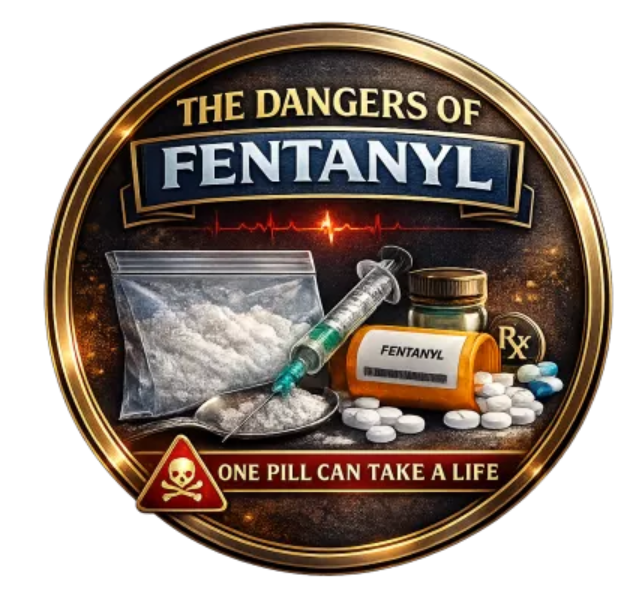
If you ask most anyone what they think of Fentanyl, the opinion will right up there with heroin or using battery acid for tooth paste, for a brighter and whiter smile!. And it shouldn’t be like that – becasue illegal Fentanyl has grabbed the headlines, public commercials and posters in an effort to save lives. So initially there is a concern after hearing it.
The fact is for individuals enduring the agonizing, relentless grip of severe chronic pain – particularly those in advanced oncology or palliative care—this compound Fentanyl has been nothing short of a miracle.
Here’s the “banned, not get banned” dialouge, reformated:
The Fentanyl Patch
Legal Fentanyl Prescriptions
- Annual Prescriptions: According to the Drug Enforcement Administration, legal prescriptions for pharmaceutical fentanyl in the United States where approximately 1.7 million prescriptions. One prescription = multiple patches.*
Medical Context - Transdermal Patches (80%–90% of retail prescriptions): Used extensively for continuous, around-the-clock management of severe chronic pain (primarily in oncology and palliative care). They are designed to release medication slowly through the skin over a 48-to-72-hour period.
- Indication: Legal pharmaceutical fentanyl is a potent Schedule II synthetic opioid reserved strictly for severe chronic pain (such as in cancer care) or monitored surgical anesthesia.
- Distinction from Illicit Fentanyl: The vast majority of fentanyl discussion centers on illicitly manufactured fentanyl (IMF) smuggled or distributed illegally, which drives tens of thousands of overdose deaths and is separate from regulated medical supervision.
- While aggregate prescription databases do not publish a singular daily percentage, comprehensive clinical utilization reviews indicate that transdermal patches represent the vast majority of outpatient legal fentanyl prescriptions, typically accounting for 80-90% of the outpatient retail market.
As for the FDA (whose staff also read the daily Fentanyl news) and some day declaring banning Fentynal will be “good for the country, and can save tens of thousands of lives” .. he just don’t see it happening.
Virtually all the news and public awareness stems from illicitly manufactured fentanyl, which is mixed into street drugs or pressed into counterfeit pills. Because the names are identical, it is very common for people to confuse the street crisis with the regulated prescription drug.
However the FDA cannot and will not ban legal medical fentanyl simply as a public relations move or an act to “solve the problem.” The reason is rooted in how federal drug regulation works:
1. Distinct Legal Channels
The FDA only regulates the legal pharmaceutical supply chain (manufacturers, pharmacies, and physicians). Banning medical fentanyl would entirely strip a critical tool away from doctors treating cancer patients, while doing absolutely nothing to stop the cartels smuggling illicit chemical precursors across borders to make street fentanyl. Regulators are fully aware that stopping prescription patches will not change the illegal supply on the street.
2. The Medical Necessity Threshold
By law, the FDA evaluates a drug based on its clinical benefit-to-risk ratio for patients. For individuals suffering from severe breakthrough cancer pain or those undergoing complex surgical procedures, medical fentanyl provides essential, localized relief that other drugs cannot match. Completely banning it would violate the FDA’s mandate to preserve access to effective medications for patients with legitimate medical needs.
3. Strict Safety Control Over Banning
Instead of a total ban, the FDA manages high-risk, low-volume medications using a system called REMS (Risk Evaluation and Mitigation Strategies). For example, the FDA’s TIRF REMS Program mandates that any doctor prescribing certain fast-acting fentanyl products—and any pharmacy dispensing them—must be specially certified and registered. This keeps the drug tightly locked down without a complete prohibition.
4. What Law Enforcement Actually Bans
When you hear about the government banning fentanyl substances to fight the street crisis, they are usually referring to actions by Congress or the Drug Enforcement Administration (DEA) to permanently outlaw fentanyl analogues. For instance, legislation like the HALT Fentanyl Act was designed to permanently ban altered street variants (“fentanyl-related substances”) to ensure law enforcement has the authority to seize them. These bans explicitly exempt the FDA-approved medical formulations used in hospitals.
Ultimately, the medical community and federal regulators maintain a strict wall between the criminal crisis of illicit street fentanyl and the highly restricted medical treatment
The Nutriband Fentanyl Patch
Act I: The Careless Guest (The Tale of Quaaludes cont.)
In the 1970s, a drug named Quaalude entered the fortress. It was supposed to be a quiet, safe sedative to help people sleep. Instead, it threw a massive, uncontained party.
Because Quaaludes were just standard oral pills, they were incredibly easy to abuse, pass around at discos, or divert to the street. The manufacturer, completely overwhelmed by the negative press and corporate headaches, effectively threw its hands up and walked away from the drug. When the DEA realized the drug had a high potential for abuse and that alternative, safer sleep aids existed, they didn’t just kick Quaaludes out of the building—they demolished the entire room by reclassifying it as Schedule I. They shut down the global chemical supply because the drug had become completely unmanageable.
Act II: The Ironclad Guard (The Tale of Nutriband)
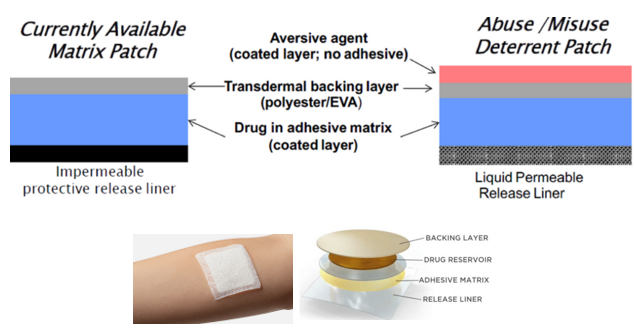
Now, enter the modern era. Fentanyl is already inside the fortress, heavily restricted because it is an incredibly potent, necessary tool for severe cancer pain. But the current generic patches have a security flaw: abusers can chew, scrape, or manipulate them to extract the opioid all at once.
Instead of trying to ignore the problem like the makers of Quaaludes did, a company called Nutriband designed a security guard for the patch. They created a proprietary technology called AVERSA™, which embeds “aversive agents” directly into the structure of the patch.
If a patient wears the AVERSA Fentanyl patch normally, the medication flows safely into the skin just as intended to relieve chronic pain. But if someone tries to abuse it—by chewing it, swallowing it, or chemically extracting the drug—the aversive agents are instantly triggered, making the experience highly unpleasant, ineffective, or impossible to tolerate.
Why Nutriband’s Patch Won’t Faced the Quaalude Fate
The fundamental reasons the FDA won’t ban Nutriband’s abuse-deterrent patch the way they banned Quaaludes come down to three structural differences:
- Solving the Problem vs. Being the Problem: Quaaludes were banned because the pill was the root source of a massive street addiction crisis. Nutriband’s technology is being developed specifically to prevent the abuse, misuse, and accidental exposure of an existing clinical drug. The FDA actively encourages this type of innovation.
- Medical Necessity: The medical community easily replaced Quaaludes with alternative sleep aids. There is no easy, equivalent replacement for the profound, continuous pain relief that transdermal medical fentanyl offers to terminal oncology and palliative care patients.
- The Street Crisis is Already Separate: As we discussed, today’s crisis is driven by illicit street powder mixed into fake pills, not by patients misusing clinical patches. Banning an abuse-deterrent medical patch would punish legitimate patients while doing zero to stop the illegal cartel supply.
By adding an inseparable layer of safety to a necessary drug, Nutriband’s technology allows medical fentanyl to remain accessible to the patients who genuinely need it, while locking the door against those who want to misuse it.
Goodbye to Quaaludes!
A coordinated, aggressive government ban combined with a complete shutdown of the global chemical supply chain
Unlike modern drug crises driven by cartel-made street chemicals, Quaaludes (the brand name for methaqualone) were purely a product of the legitimate pharmaceutical industry. This made them uniquely vulnerable to government intervention.
The downfall happened in three distinct stages:
1. Corporate Exhaustion
Originally marketed in the 1960s as a safe, non-addictive alternative to barbiturates, Quaaludes quickly exploded into a massive street and disco drug. By 1978, the drug’s reputation was so toxic that the original manufacturer, William H. Rorer, Inc., sold the rights to the Lemmon Company. Rorer famously stated that while Quaaludes only accounted for 2% of their sales, they created 98% of their corporate headaches. Lemmon stopped manufacturing them entirely by 1983 because doctors grew too terrified of the stigma to prescribe them.
2. The International Chemical Chokehold
Even as American factories stopped making the pills, underground labs were buying bulk methaqualone powder from international chemical plants in Europe and Asia to press fake “714” pills for the black market.
To fix this, a DEA official named Gene Haislip pioneered a new strategy: he traveled to countries like West Germany, Austria, Hungary, and China, convincing their governments to completely halt the production and export of bulk methaqualone. By choking off the raw chemical ingredients globally, the DEA effectively starved the black market.
3. The Federal Schedule I Ban
In August 1984, President Ronald Reagan signed a congressional bill officially reclassifying methaqualone as a Schedule I controlled substance.
This classification declared that the drug had a high potential for abuse and no accepted medical use, making the production, sale, or possession of Quaaludes completely illegal in the United States. We have good memories – RIP.